

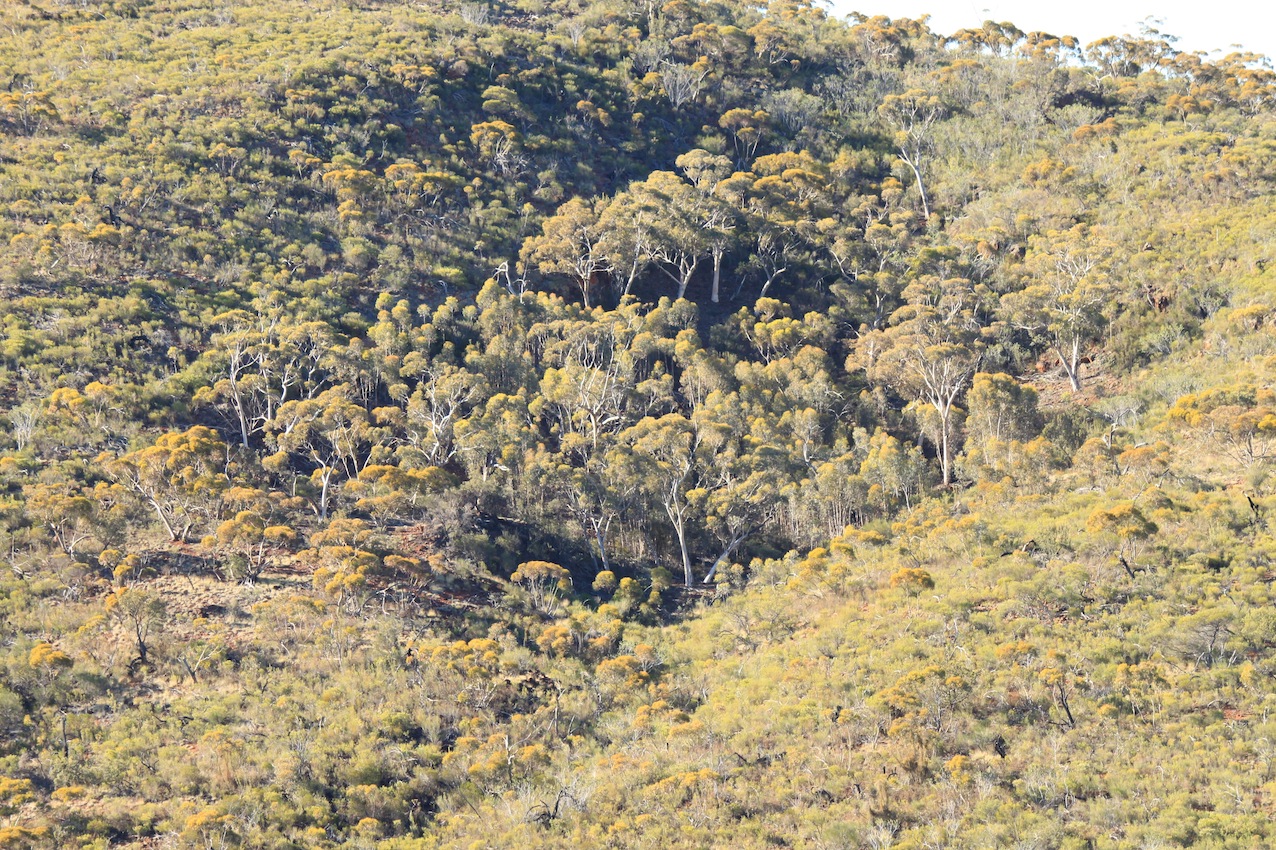
Tree species that grow on the slopes of the Range
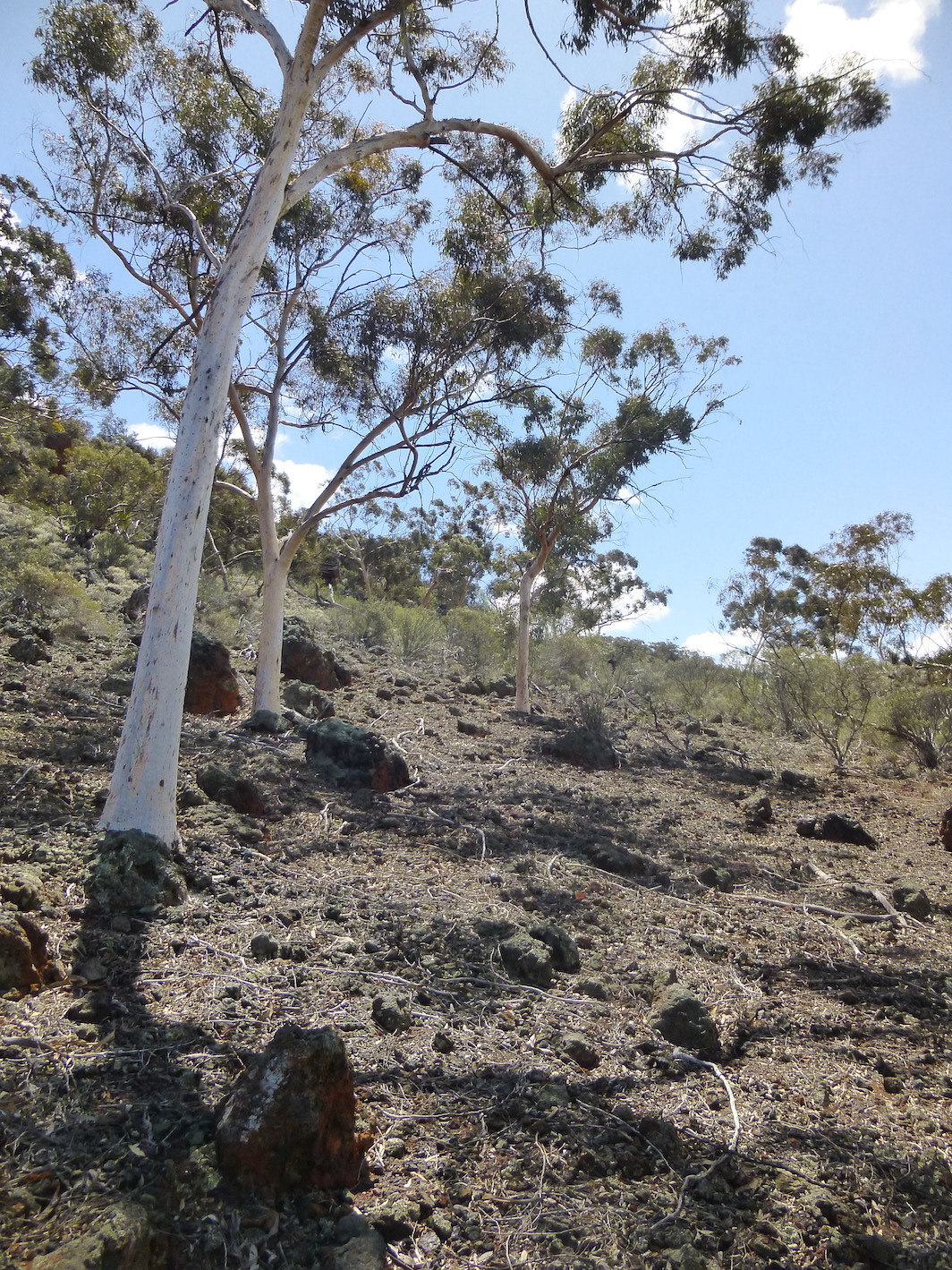
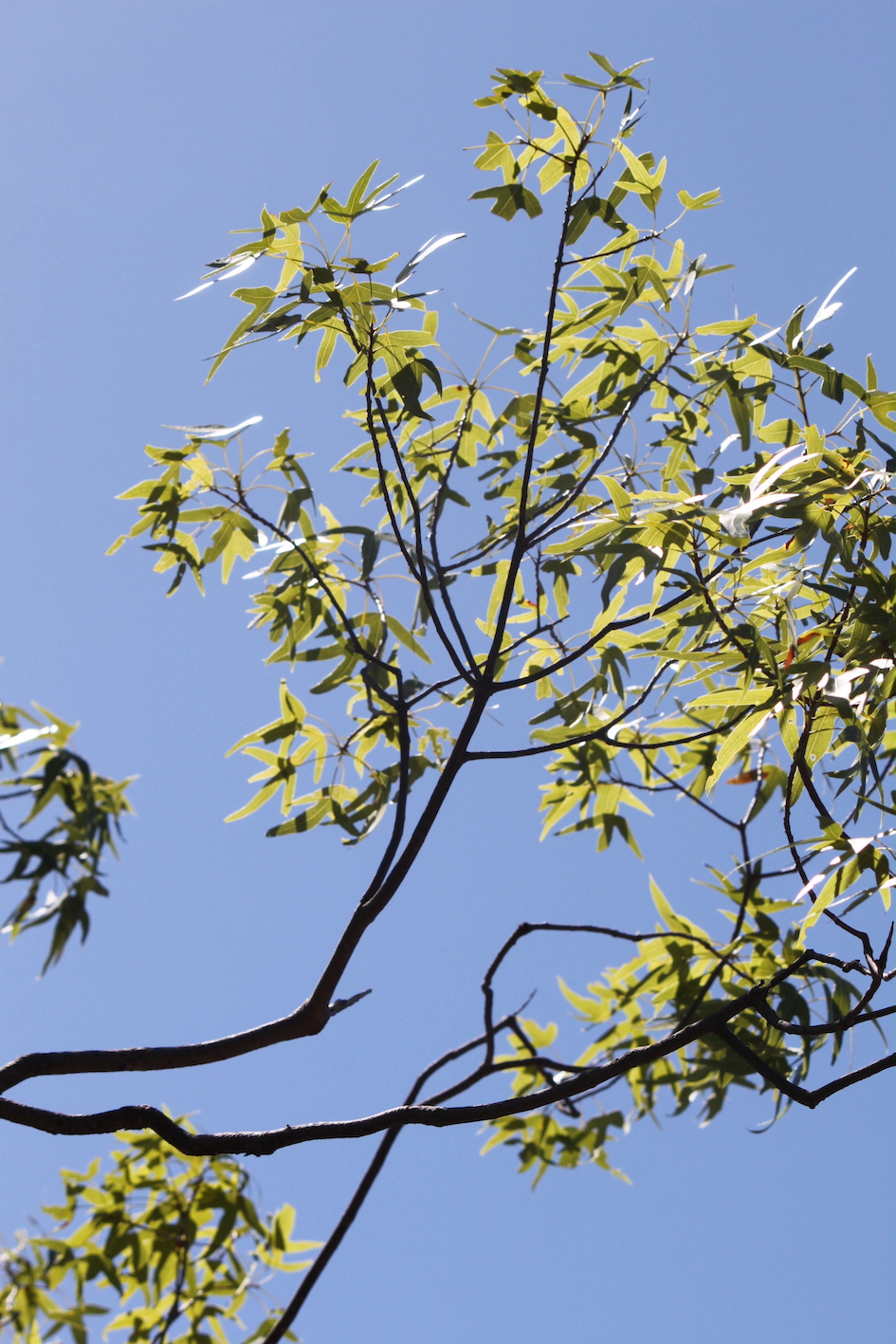
Inland Wandoo Eucalyptus capillosa Desert Kurrajong Brachychiton gregorii
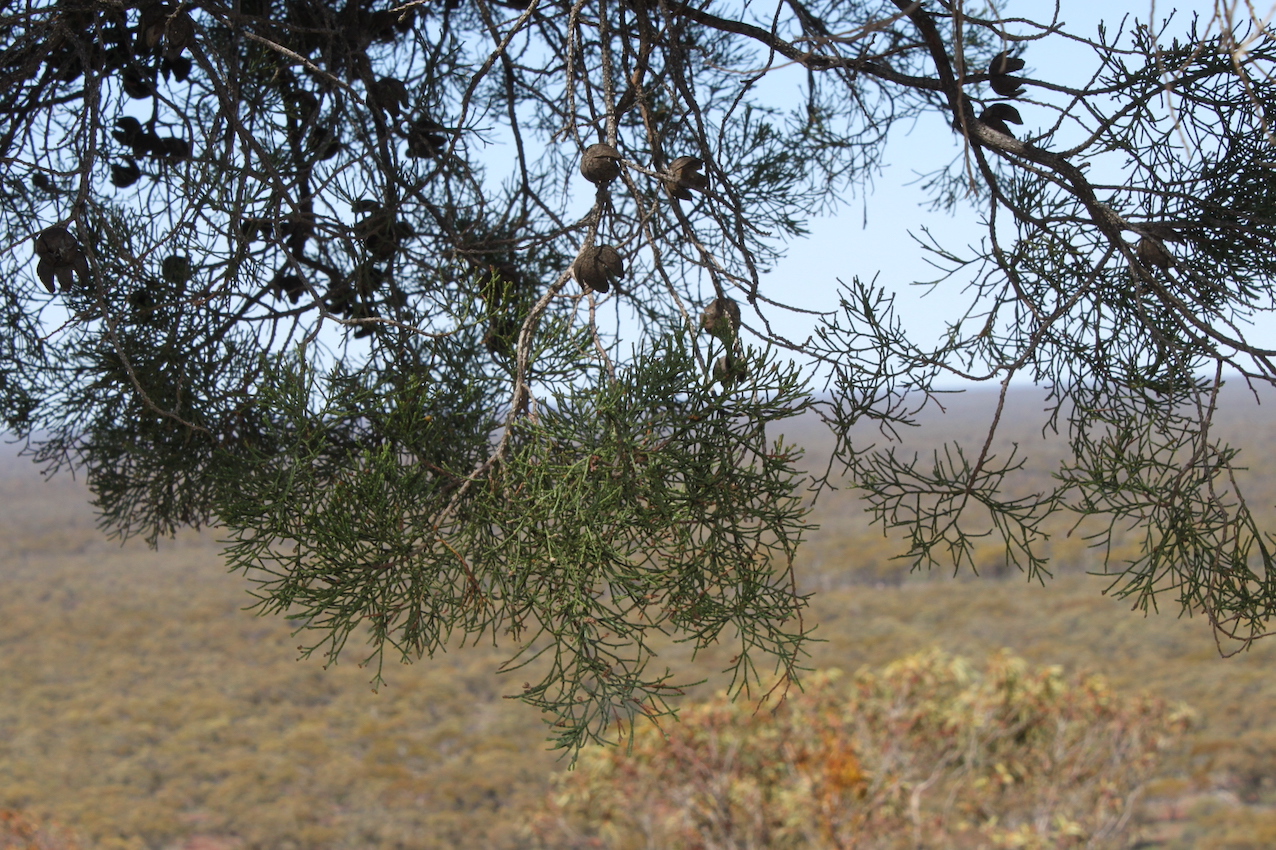
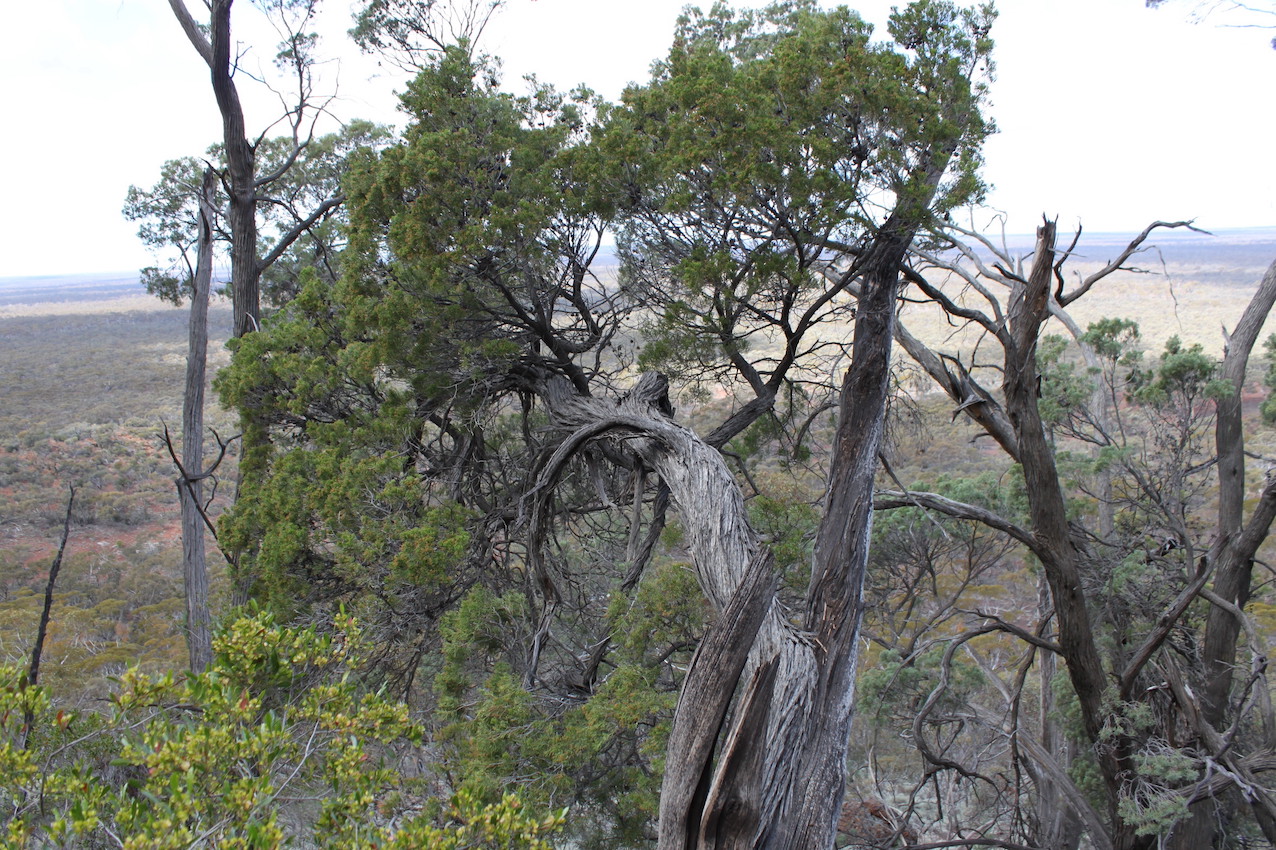
White Cypress Pine Callitris columellaris
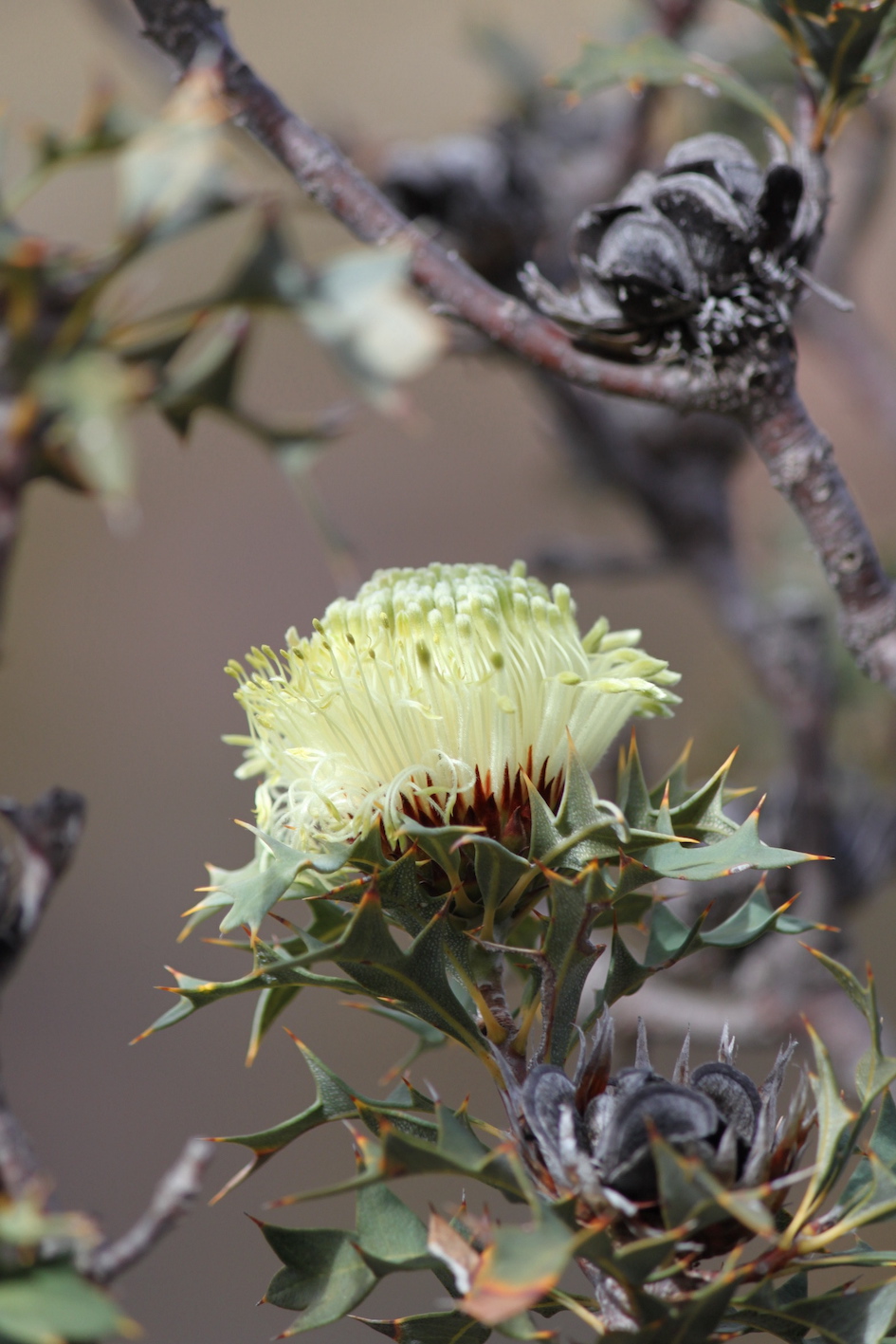
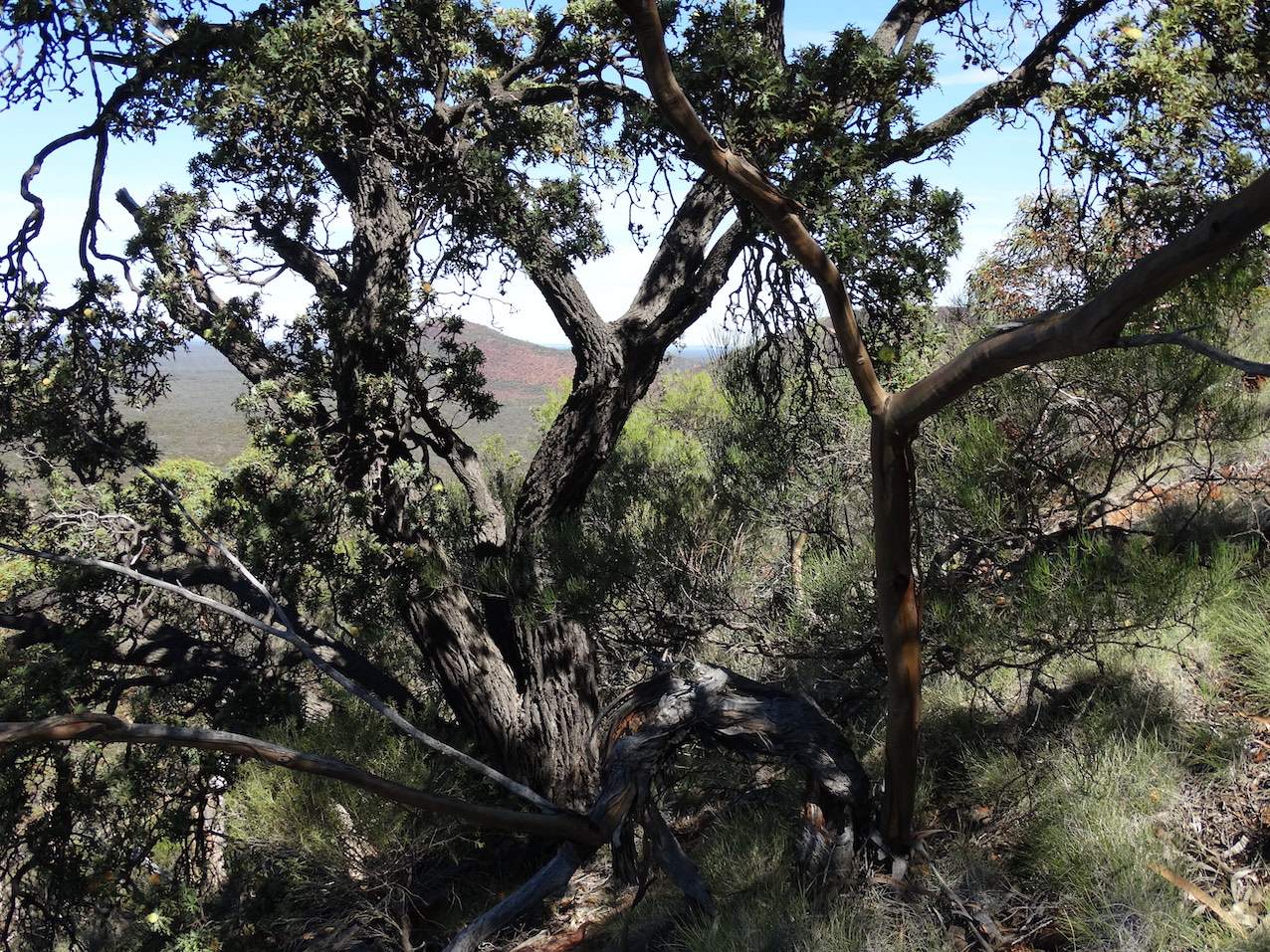
Flower & fruit Dryandra arborea Yilgarn Dryandra Dryandra arborea (Greg Warburton)
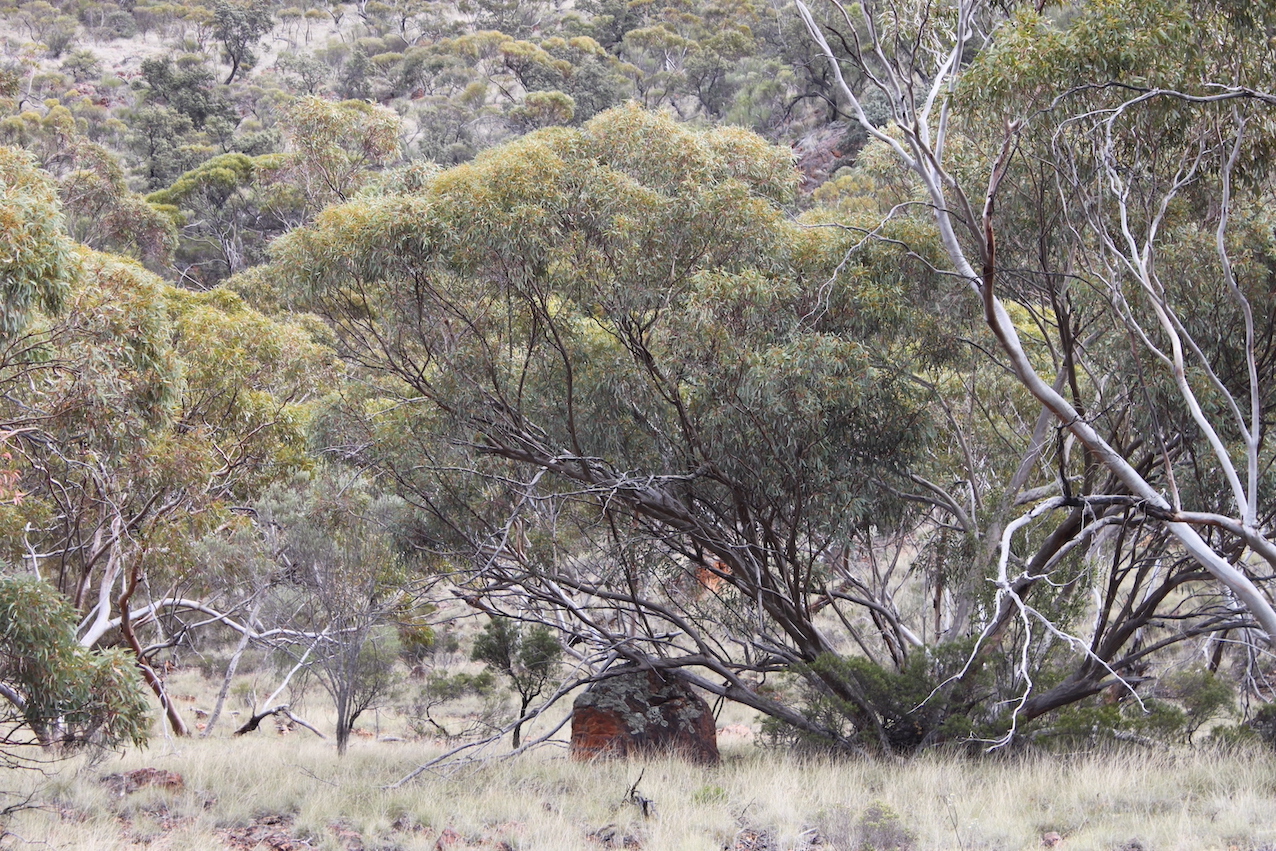
Helena and Aurora Range (Bungalbin) is a a tall (up to 704m AHD), very wide Banded Ironstone Formation (BIF) range. It is the largest BIF range in the Yilgarn. It is large enough to support a tall tree species on its slopes, such as Inland Wandoo (Eucalyptus capillosa). The large BIF outcropping supports Yilgarn Dryandra (or Tree Dryandra). Dryandra arborea grows within fissures of the BIF outcropping, often forming trunks of impressive girth. The White Cypress Pine (Callitris columellaris) grows high on the slopes, also of impressive girth and height. The Desert Kurrajong (Brachychiton gregorii) stands out in its quite way and reminds us we are in semi-arid country, far from the South West (with its higher rainfall and closer proximity to the coast).
Inland Wandoo or Wheatbelt Wandoo
Eucalyptus capillosa*
Family: Myrtaceae
-
- smooth white bark
- tallest tree on the slopes of the Range (~10-25m high)
- sometimes stands occur in swales high on the slopes
- also occurs at the base of the Range on duricrust outcropping
- Bungalbin is the only BIF range in the Yilgarn to support Inland Wandoo on its slopes
- distribution throughout Great Western Woodlands, Goldfields and Wheatbelt
*the subspecies, Eucalyptus capillosa subsp. capillosa, is no longer current/no longer used
Desert Kurrajong
Brachychiton gregorii
Family: Malvaceae (Mallow Family)
-
- deeply divided, three lobed leaf
- flowers (cream to red) during the summer months, December to January
- is deciduous, loosing its leaves under dry conditions (such as in the summer months) and before flowering
- produces woody pendulous seed pods
- tree can grow 8-12m high
- leaves reshoot quickly after rainfall events
- the Yilgarn is the southern extent of its distribution (does not occur in the south west)
White Cypress Pine
Callitris columellaris
Family: Cupressaceae (Cypress Family)
-
- a native pine growing up to 8m high
- not known to flower until 6 to 8 years old
- produces woody fruits
- the Yilgarn is within its natural distribution
- some large girthed trees occur on the slopes of Bungalbin
Tree Dryandra or Yilgarn Dryandra
Dryandra arborea*
Family: Proteaceae
-
- a tree that grows up to 8m high
- produces flowers from Autumn to Spring when rains occur
- flowers are visited by honeyeaters and also very likely by Western Pygmy Possum
- some large girthed trees occur on the slopes of Bungalbin
*Dryandra arborea also known as Banksia arborea
Mallees that live on the slopes of the Range
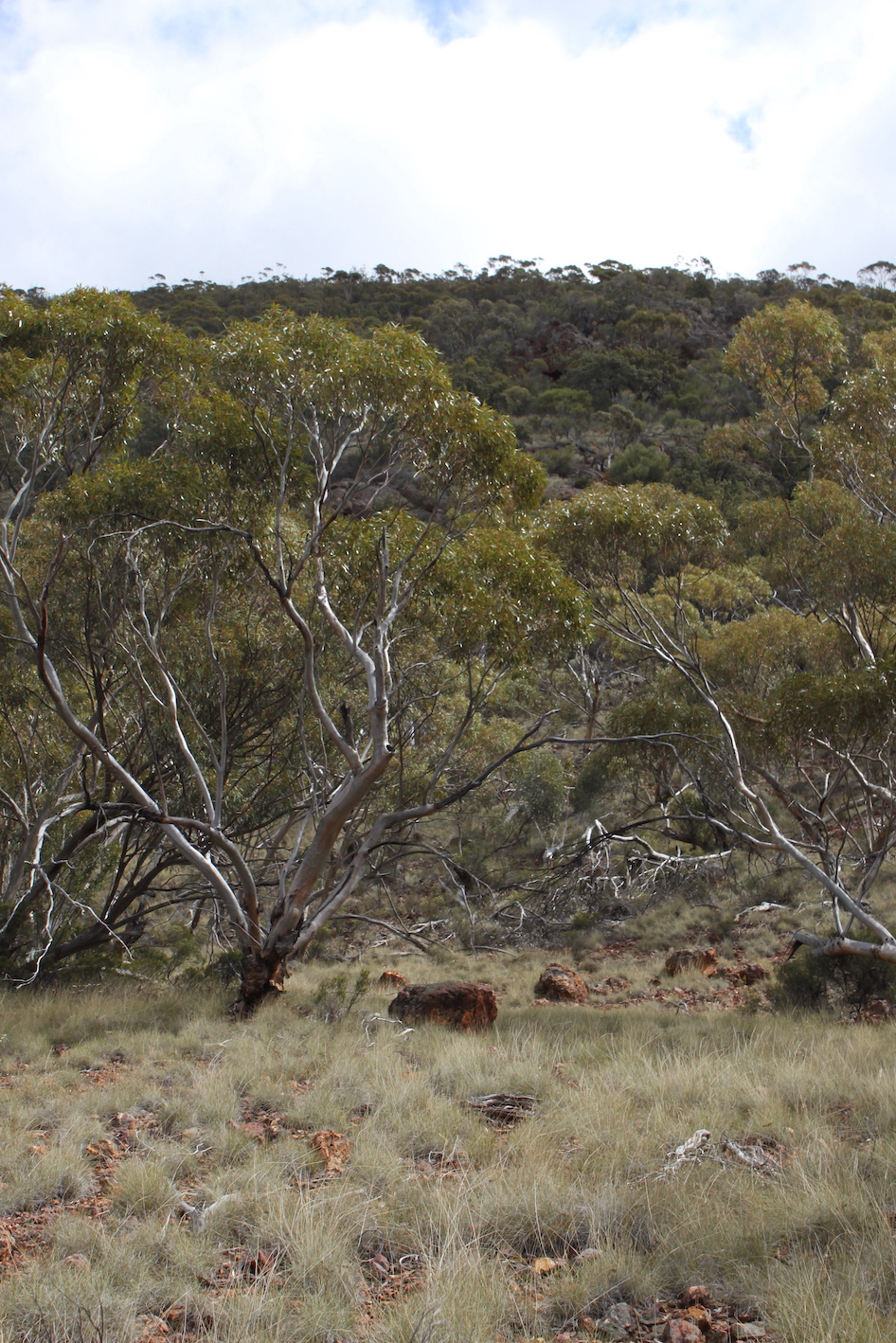
Eucalyptus corrugata Eucalyptus ebbanoensis subsp. ebbanoensis
These are two mallee species that grow together on the slopes of the Range (Bungalbin), Eucalyptus corrugata and Eucalyptus ebbanoensis subsp. ebbanoensis. They can most easily be distingusihed from eachother by the colour of their leaves (see details below). They also have quite different shaped flower buds and fruits, and Eucalyptus corrugata has a rough barked sock at the base of its trunks, while Eucalyptus ebbanoensis subsp. ebbanoensis has completely smooth trunks.
Rib-fruited Mallee Eucalyptus corrugata
Family: Myrtaceae
-
- has shiny (glossy) grass-green leaves
- fruit are strongly corrugated (ribbed)
- buds are also strongly corrugated. When the buds open the corrugated cap is shed, releasing the white stamens, and the corrugated caps (operculums) can be found on the ground under the mallees.
- being a mallee it has multiple trunks growing from a lignotuber (mallee root).
- the trunks are smooth and white, except for a rough bark (sock) 1-2m high from the base of each trunk.
Iron Ore Mallee Eucalyptus ebbanoensis subsp. ebbanoensis
Family: Myrtaceae
-
- has dull (matt) blue-grey leaves
- fruit are smooth and a dark, glossy, reddy-brown colour
- the multi stemmed trunks are smooth and white
- the species name ebbaneoensis comes from: Ebano - refering to Eban Springs in Mingenew where the type specimen was collected in 1904, and -ensis refers to 'place' or 'country' in latin.
When looking down on the southern slopes, while standing on the top of the Range can see a mosaic of glossy and dull-grey mallee canopies of Eucalyptus corrugata and Eucalyptus ebbanoensis subsp. ebbanoensis (see photos below)
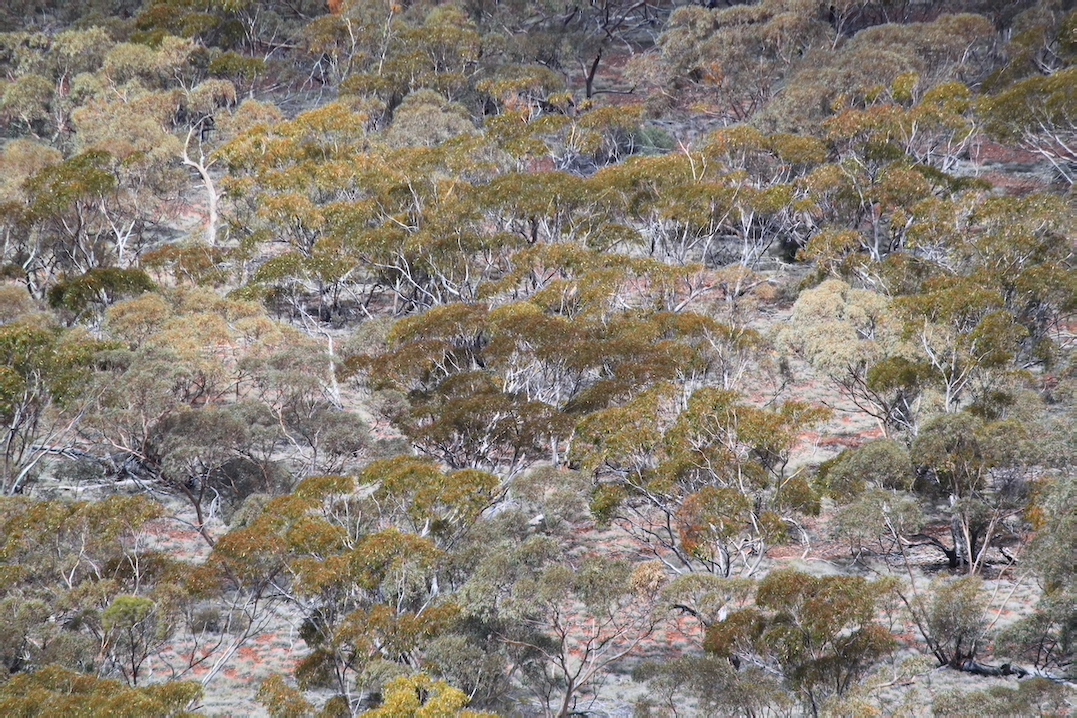
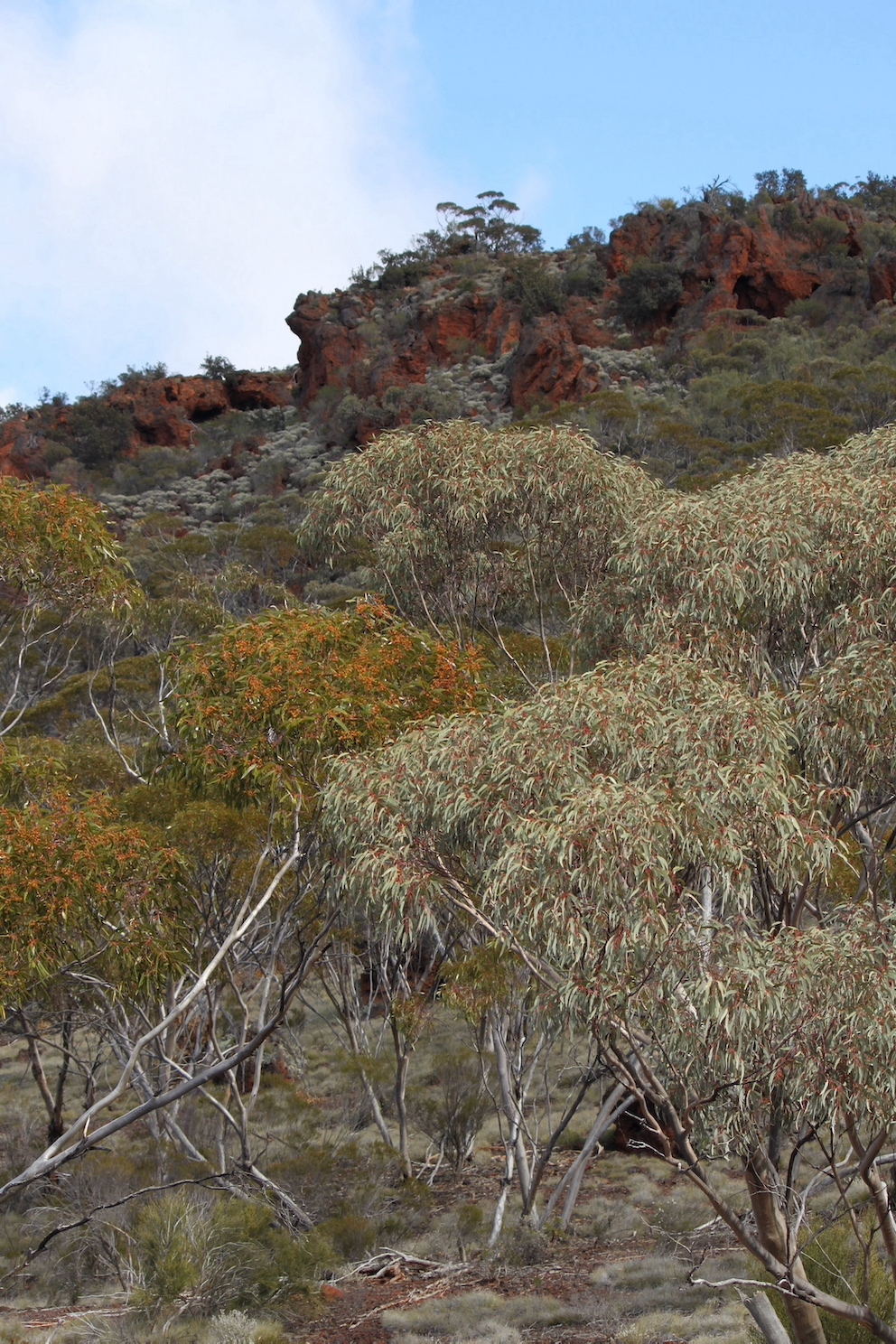
Contrasting canopies of the two mallees that grow on the slopes of Bungalbin (Eucalyptus corrugata with glossy green leaves and Eucalyptus ebbanoensis subsp. ebbanoensis with dull blue-green leaves).
Small Trees on the slopes of the Range
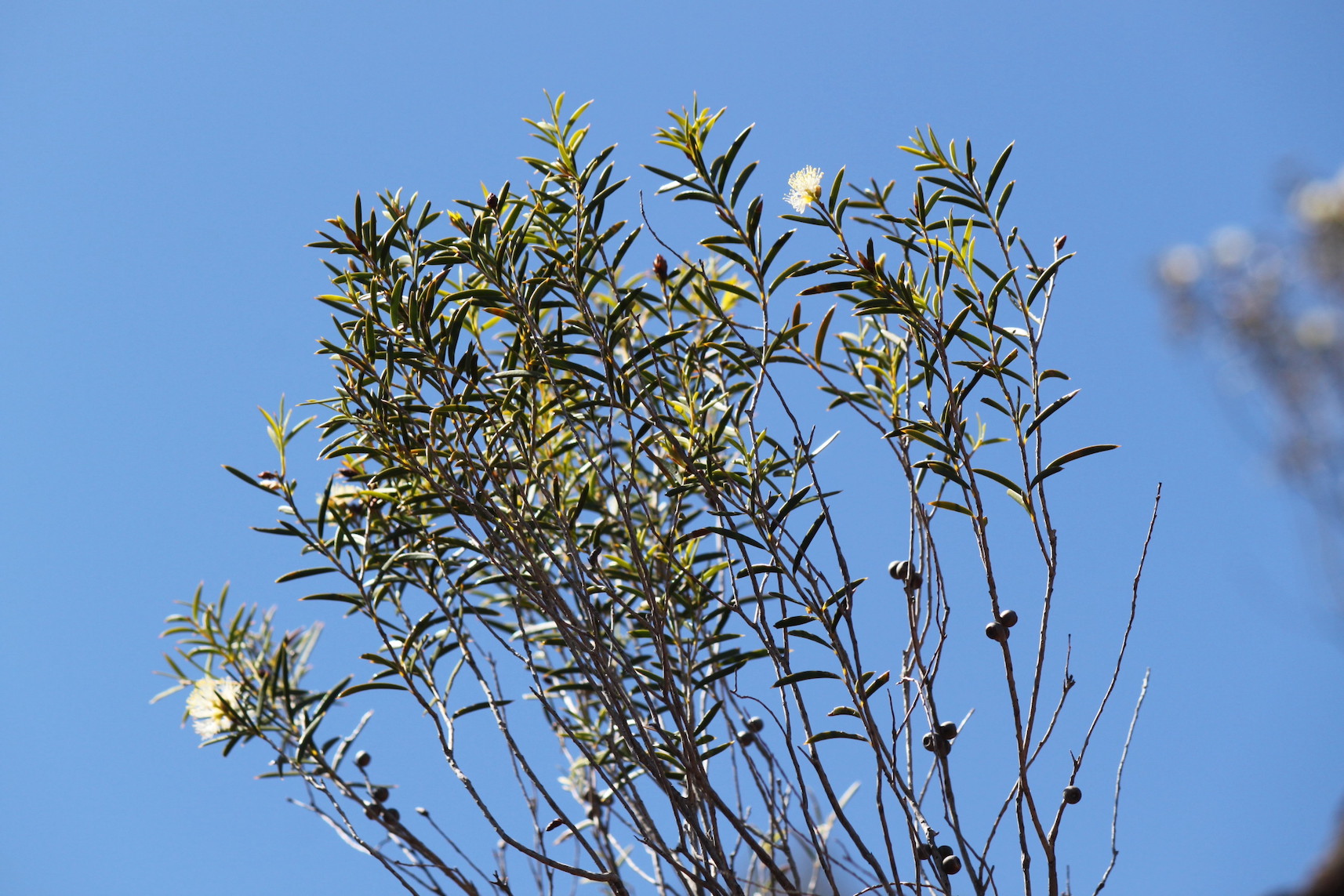
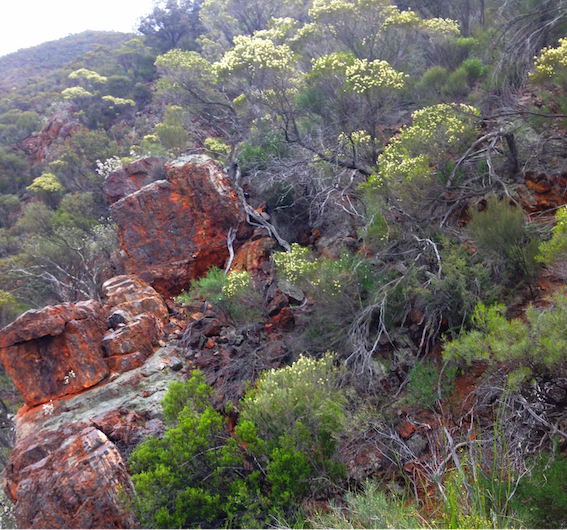
Pungent Honey-myrtle Melaleuca leiocarpa
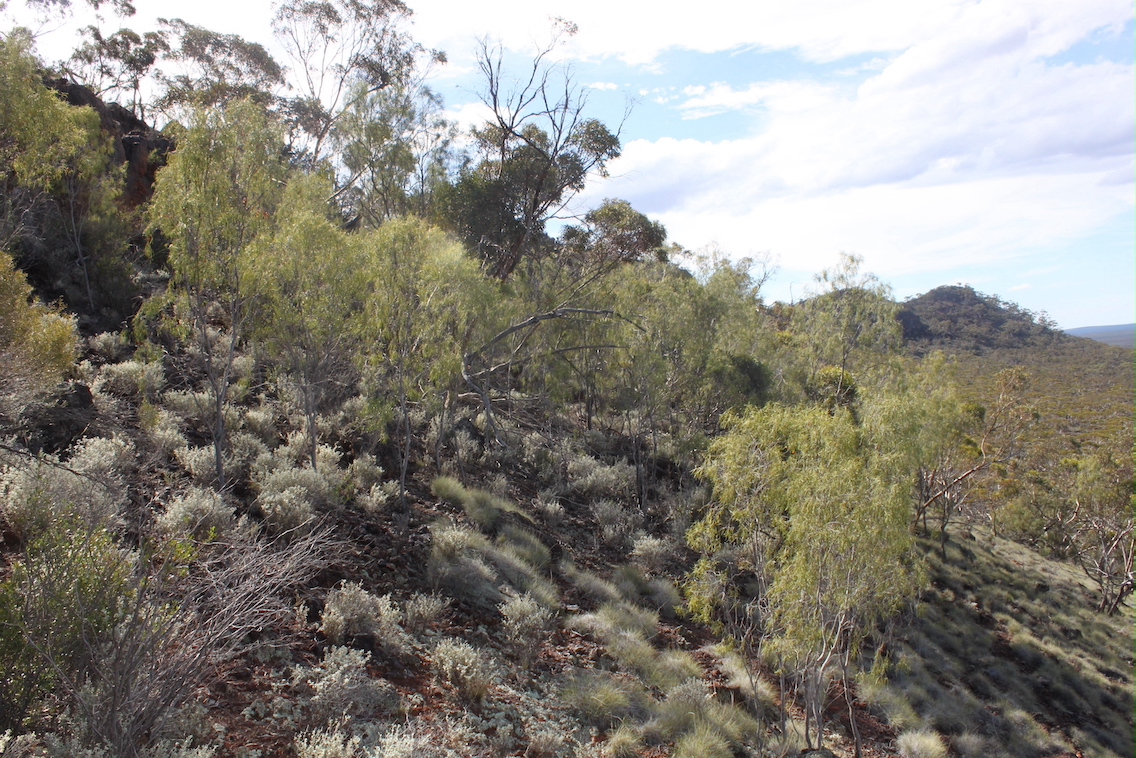
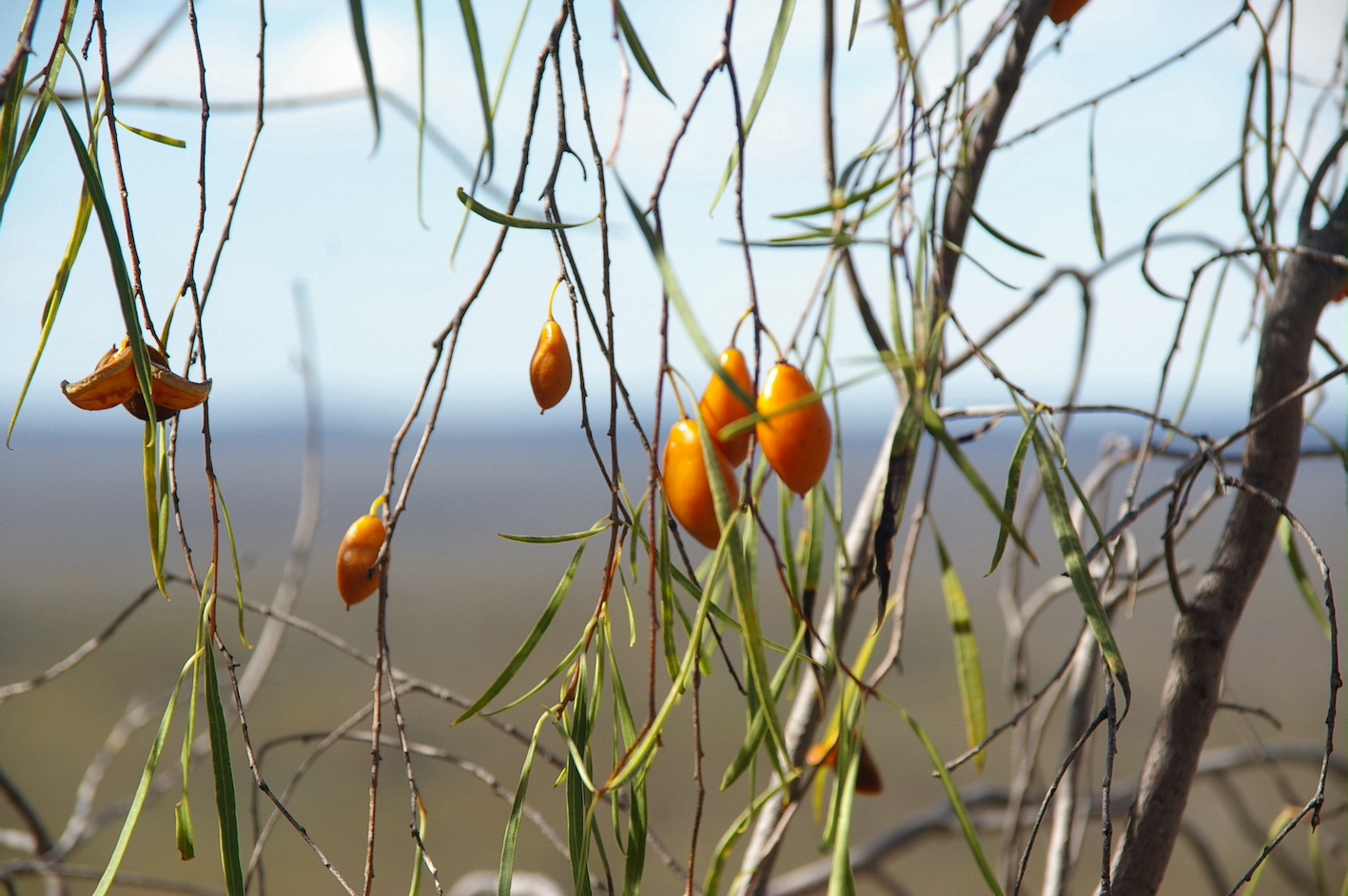
Weeping Pittosporum Pittosporum angustifolium on south slope
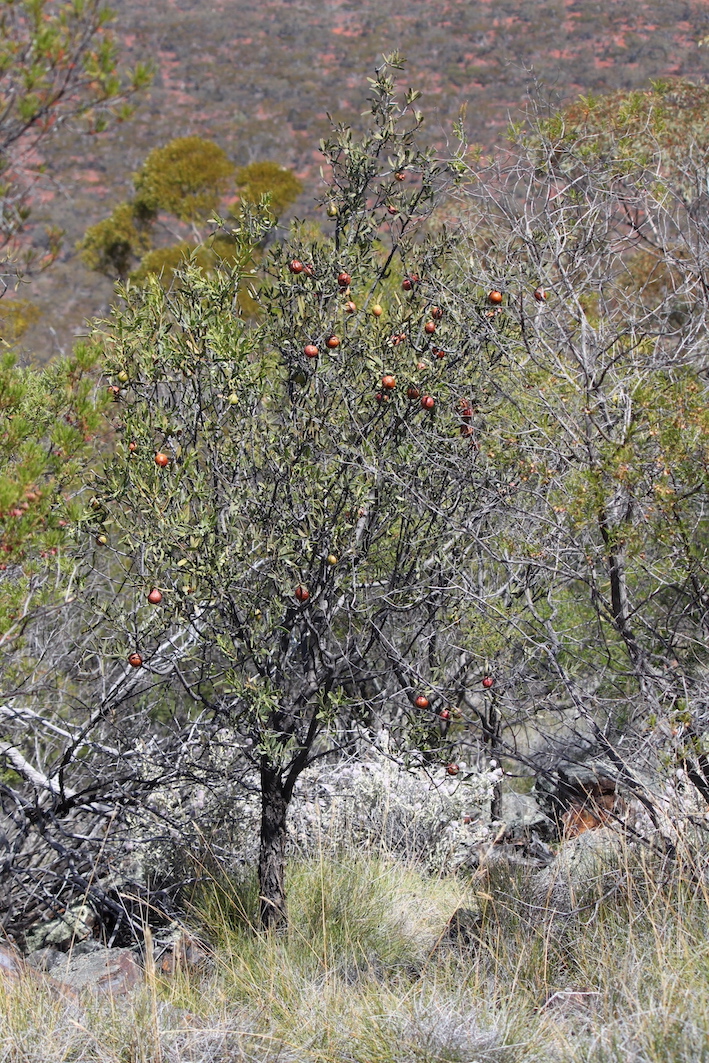
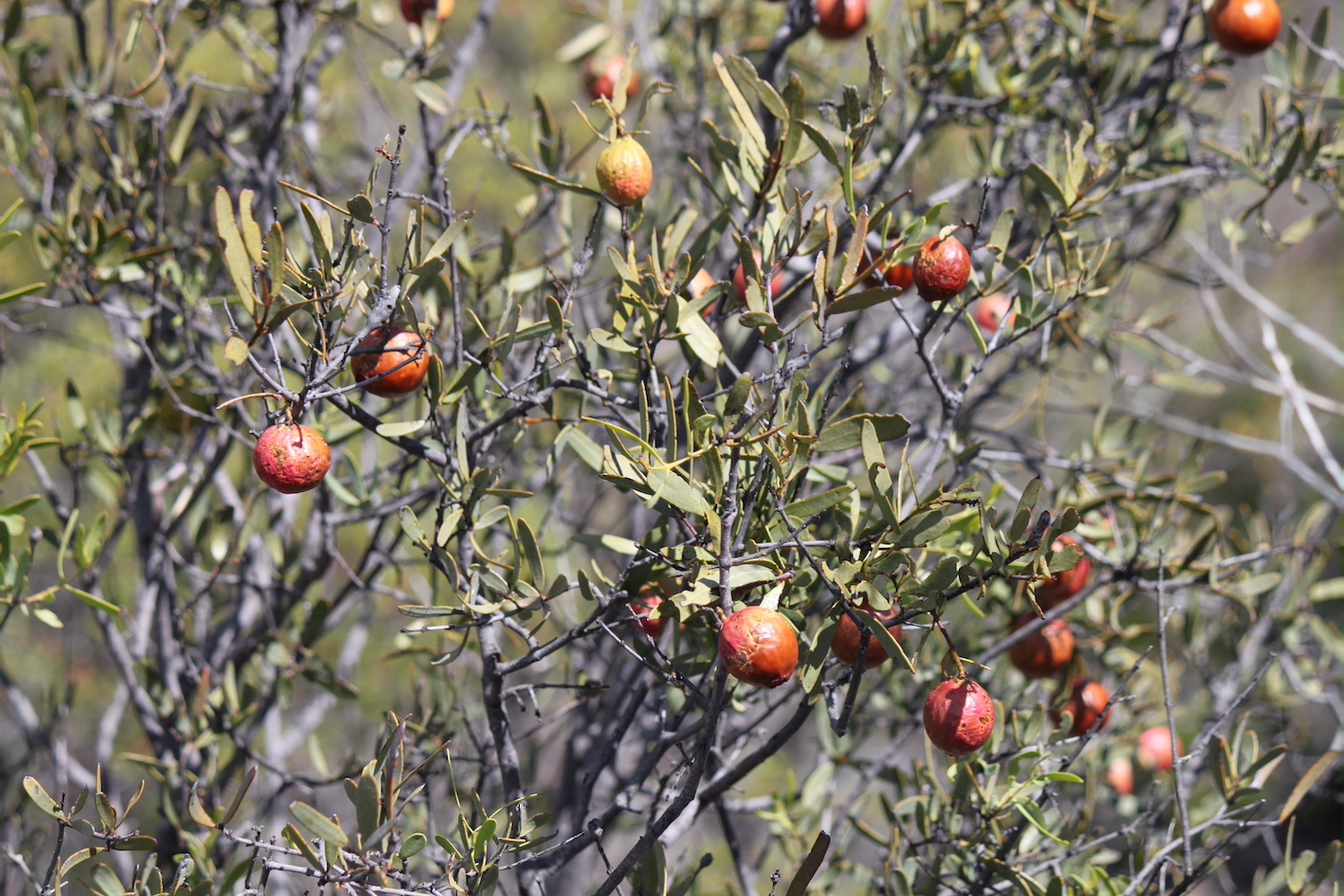
Desert Quandong Santalum acuminatum
Pungent Honey-myrtle Melaleuca leiocarpa
Family: Myrtaceae
-
- grows out of cracks or fissures in the banded ironstone formation (BIF) outcropping
- varies in height, can occur as a small tree up to 4m high
- is in the Myrtaceae Family and has cream-white flowers and woody fruits
- the species name leiocarpa means smooth (leios) fruit (karpos) (ancient Greek) (source: Atlas of Living Australia)
Weeping Pittosporum (also known as Native Apricot, Native Willow, Quinine Tree)
Pittosporum angustifolium
Family: Pittosporaceae (Pittosporum Family)
-
- grows on the south slopes of the Range
- has orange coloured fruit
- the species name angustifolium means narrow (angust) leaf (-folium) (source: Atlas of Living Australia)
Desert Quandong* (also known as Native Peach, Sweet Quandong) Santalum acuminatum
-
- grows on the slopes of the Range (also on the flats surrounding the Range under eucalypt woodland)
- is hemiparasitic on roots
- has round fleshy fruits (drupes) that are initially green then turn red
- when fruit drops to the ground the flesh is eaten or comes away revealing a hard nut with a rugose surface (brain-like) that encloses the seed.
- the species name acuminatum means slender pointed (Latin), in reference to its leaves (source: Australian Native Plants Society)
*(Quondong is an informal spelling that is sometimes used)


